Engineering
Data Contracts as Compiler Passes: Stopping Schema Drift in Upstream CI/CD
Data contracts fail when treated as reactive warehouse monitors. Shifting contract verification into upstream application CI/CD prevents production pipeline breakages.
November 9, 2026 · Engineering · Leon Liang
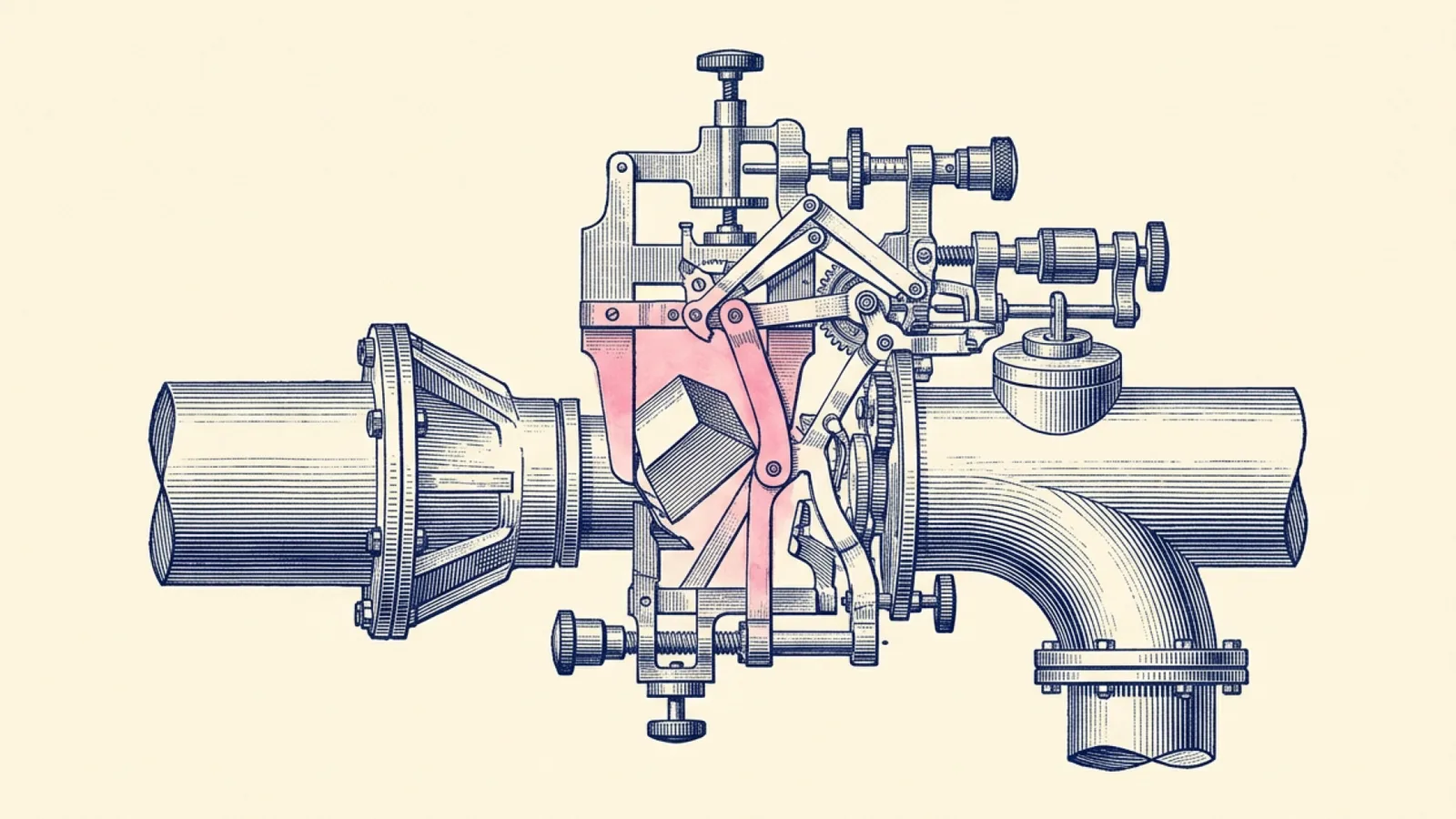
A persistent misconception across data platform architecture is that data contracts belong in the data warehouse as runtime monitors, quality alerts, or service level agreements. In reality, data contracts fail when deployed as downstream monitors. Data contracts only succeed when treated as blocking compiler passes in upstream application CI/CD pipelines that halt backend software deployments before breaking payloads ever reach a message broker or change data feed.
The Flaw of Downstream Warehouse Monitoring
When engineering organizations place data contract validation inside the cloud data warehouse or lakehouse, validation happens too late. The breaking payload has already left the application boundary, passed through the message bus or change data capture feed, landed in analytical storage, and corrupted downstream models.
Downstream data teams typically discover these schema drifts when ingestion fails or daily transformations crash. By that point, operational recovery requires tedious backfilling and pipeline repair. Passive alerts and warehouse-level tests do not prevent upstream software engineers from shipping breaking schema modifications. They only alert downstream engineers to existing production damage.
Organizational pressures make this reactive pattern unsustainable. In an industry study conducted with Wakefield Research of 200 data engineers and leaders (VP level and above), 91% reported actively building or having deployed Generative AI products under 100% executive pressure, yet 68% admitted they are not completely confident in the quality and reliability of the data powering those AI applications. Furthermore, 90% reported that executive leadership lacks realistic expectations regarding technical feasibility and business value, while 84% noted that implementation responsibility falls directly on existing data engineering teams rather than specialized AI teams.
When downstream data teams bear sole operational responsibility for pipeline health while product engineers modify backend database tables without contract boundaries, data quality inevitably breaks down.
Shifting Contracts to the Upstream Application Perimeter
The solution is shifting the entire contract perimeter out of the data stack and into application engineering repositories. In backend software engineering, typed languages use compilers to catch interface violations at build time. If an engineer alters a function signature without updating callers, the build breaks immediately. The defect never reaches production.
Data contracts must operate under the exact same paradigm. Rather than treating contracts as observability dashboards or post-ingestion assertions, teams must treat data contracts as blocking compiler passes in upstream application continuous integration and continuous deployment (CI/CD) pipelines.
When a software engineer alters a database column, renames an event attribute, or drops a field in an application pull request, the CI/CD pipeline evaluates the proposed change against the published data contract. If the pull request introduces an unannounced breaking change, the build fails and blocks deployment. The malformed payload never touches Kafka, Kinesis, or an Iceberg table.
Codifying Interfaces with the Open Data Contract Standard
Implementing contracts as compiler passes requires a standardized, machine-readable format that lives in version control alongside backend application code.
The Open Data Contract Standard (ODCS) graduated to a vendor-neutral governance framework hosted by the Bitol project under Linux Foundation AI & Data. ODCS establishes a standardized YAML-based format stored in version control to formalize schema definitions, data quality assertions, semantic metadata, SLAs, and ownership between upstream data producers and downstream consumers, allowing teams to catch breaking schema changes in CI/CD before pipelines fail in production.
By storing ODCS files directly in application repositories, software engineers treat event and table schemas as public APIs. Breaking changes require explicit version bumps, backward-compatibility migrations, and consumer sign-offs.
Shift-Left Verification with dbt Core Native Unit Testing
Upstream application CI/CD passes stop schema breaks at the producer boundary. Within the transformation layer, analytics engineers must apply the same shift-left discipline to SQL logic before materializing tables.
dbt Labs introduced native, first-class unit testing into dbt Core (starting in v1.8), enabling analytics engineers to validate SQL transformation logic and edge cases against mock input datasets (inline YAML dictionaries, CSVs, or SQL fixtures) prior to warehouse materialization. This decouples logic verification from full production database state, running in local and CI workflows (dbt test —select “test_type:unit”) to prevent regression bugs and reduce compute costs in data pipelines.
By combining upstream ODCS compiler passes on backend pull requests with dbt native unit tests on analytical pull requests, teams eliminate schema and transformation defects before code merges to main branches.
Fast Local and CI Verification with DuckDB and Multi-Engine Catalogs
Running compiler passes and unit tests in continuous integration requires fast execution engines that do not depend on costly, long-running warehouse clusters.
The DuckDB project officially released DuckDB 1.0.0 (‘Snow Duck’), providing production-grade stability, guaranteed forward and backward storage compatibility, and high-performance columnar processing directly inside client applications and serverless containers. For startups and scale-ups, this embedded architecture significantly reduces pipeline operational overhead by enabling complex queries over Parquet, JSON, and Apache Iceberg files locally or in lightweight worker nodes without managing dedicated warehouse clusters.
Simultaneously, Snowflake and Databricks open-sourced their metadata catalogs (Snowflake releasing Polaris Catalog under the Apache 2.0 license and Databricks open-sourcing Unity Catalog), standardizing multi-engine data access around the Apache Iceberg REST catalog specification. This shift enables startups and scale-ups to maintain a single copy of table data in open formats and query it concurrently across disparate engines (including Spark, Flink, Trino, DuckDB, and Snowflake) without vendor lock-in or redundant ETL replication.
Using embedded engines like DuckDB alongside Iceberg REST catalogs allows CI/CD runners to parse, validate, and query contract fixtures in seconds without spinning up dedicated cloud warehouse infrastructure.
Establishing Producer Accountability at Pull-Request Time
To build reliable data platforms, engineering leadership must enforce producer accountability where code is written:
- Store machine-readable ODCS specifications in the same repositories as application services.
- Configure CI/CD runners to execute contract validation on every pull request targeting staging and main branches.
- Block application merges and deployments automatically whenever schema validations fail.
- Execute dbt unit tests against mock datasets in transformation pull requests to verify business logic without warehouse costs.
Aeolus Data Solutions view. Data contracts are not post-ingestion monitors or warehouse alerts. Data contracts only succeed when implemented as blocking compiler passes in upstream application CI/CD, stopping breaking payloads before they ever leave backend services.
Next Steps for Data Contract Implementation
Treating data contracts as software compiler passes transforms data quality from a reactive debugging chore into an automated engineering standard.
Aeolus Data Solutions builds and advises on data platforms, pipelines, and AI/ML data readiness. Aeolus Data Solutions is not a cloud provider, auditor, certification body, or model vendor.
If your team is designing data platform architecture or shifting data quality checks left into application CI/CD pipelines, Aeolus Data Solutions welcomes the opportunity to explore your implementation roadmap.
Want a second opinion on your data stack?
Every Aeolus engagement starts with a fixed-fee data & AI-readiness audit — a short, low-risk first step before any larger build.
Book a data & AI-readiness audit